
Men's ring sizing is distinctly different from women's ring sizing. Men typically wear wider bands, have larger fingers on average, and most importantly, have little to no prior experience with jewelry. This means when a man purchases his first ring — usually a wedding band — he often has no idea what size he is.
Unlike women who may have worn promise rings, fashion rings, or jewelry since childhood, men are often sizing for the first time. This guide covers everything you need to know about men's ring sizing: average sizes, how to measure accurately, and how factors like band width and comfort fit affect your true size.
Average Men's Ring Size
The most common men's ring size falls between US 9 and US 10. This represents the average adult male in North America and much of Europe. However, ring size varies significantly based on height and body build.
Slimmer Build
Typically US 7–8
Smaller frame, narrower fingers, lighter hand structure.
Average Build
Typically US 9–10
Most common range. Represents the typical adult male.
Larger Build
Typically US 11–12
Larger frame, thicker fingers, heavier hand structure.
Extra Large Build
Typically US 13+
Less common. Largest men, significant weight/height.
Key insight: Unlike women who may have worn rings since childhood, most men have never been sized before. This makes accurate measurement especially important for men's first ring purchases.
Men's Ring Size Chart
Complete conversion chart for men's most common ring sizes (US 7–14). Includes UK, EU, Japan, and metric measurements.
| Diameter (mm) | Circumference (mm) | US / CA | UK / AU | EU | Japan |
|---|---|---|---|---|---|
| 17.35 | 54.4 | 7 | N½ | 54 | 14 |
| 17.75 | 55.7 | 7.5 | O½ | 56 | 15 |
| 18.14 | 57.0 | 8 | P½ | 57 | 17 |
| 18.53 | 58.3 | 8.5 | Q½ | 58 | 18 |
| 18.92 | 59.5 | 9 | R½ | 60 | 19 |
| 19.35 | 60.8 | 9.5 | S½ | 61 | 20 |
| 19.74 | 62.1 | 10 | T½ | 62 | 22 |
| 20.13 | 63.4 | 10.5 | U½ | 63 | 23 |
| 20.57 | 64.6 | 11 | V½ | 65 | 24 |
| 20.96 | 65.9 | 11.5 | W½ | 66 | 25 |
| 21.39 | 67.2 | 12 | X½ | 67 | 26 |
| 21.82 | 68.5 | 12.5 | Z | 69 | 28 |
| 22.22 | 69.7 | 13 | Z+1 | 70 | 29 |
| 22.61 | 71.0 | 13.5 | Z+1.5 | 71 | - |
Most common men's sizes (9–10) are highlighted. The full chart inside the app covers every quarter size for maximum accuracy.
How to Measure Men's Ring Size at Home
Method 1: Use the MyRingSizer App
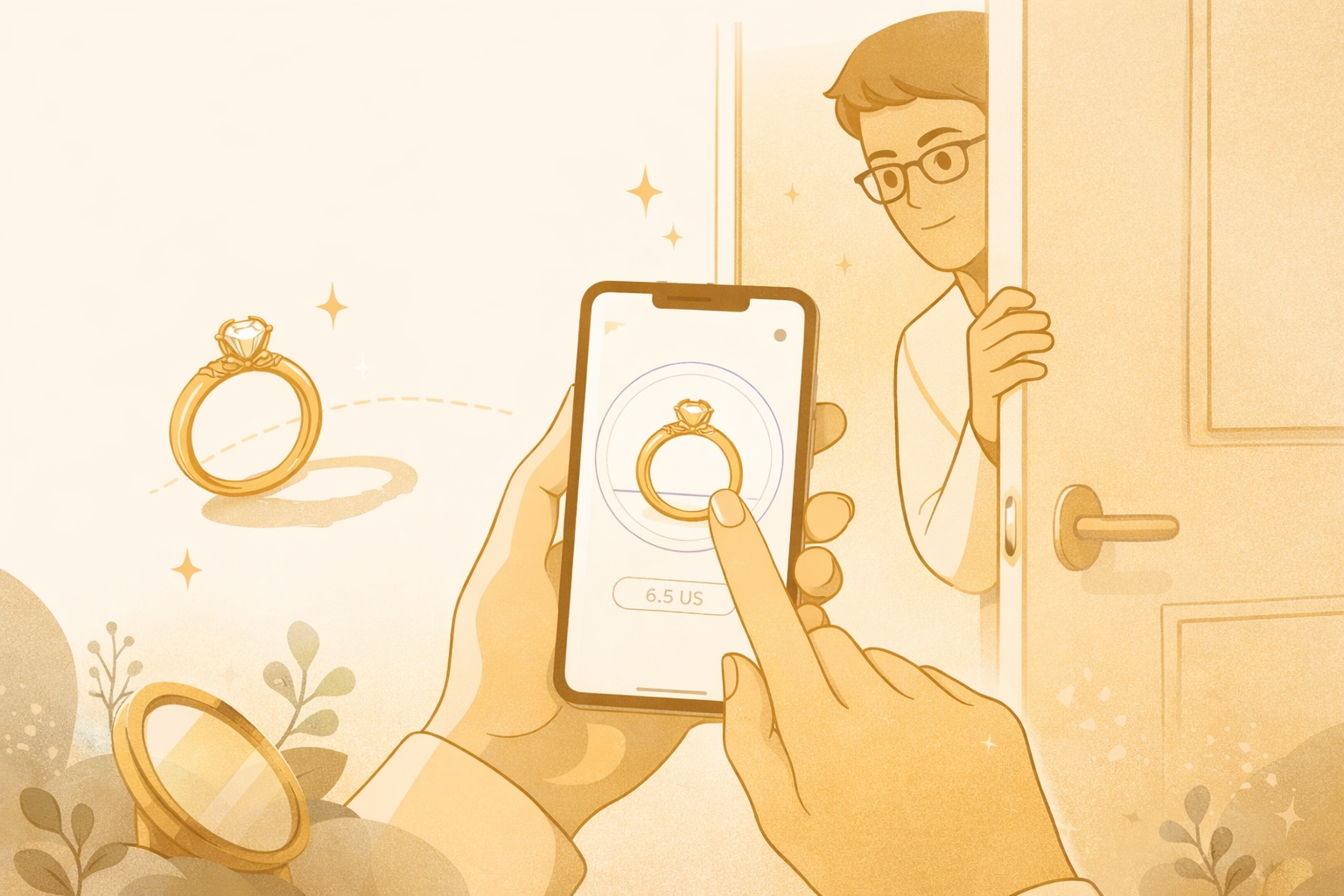
The easiest and most accurate way to measure your men's ring size is with the MyRingSizer app. Simply place an existing ring on your iPhone screen, and the app will instantly calculate your exact size in all major systems (US, UK, EU, Japan, etc.).
Download the Ring Sizer App


Method 2: The String Method
If you don't have an existing ring, measure your finger circumference with string:
- 1 Wrap a piece of string around your finger (where the ring will sit) with a snug fit.
- 2 Mark where the string overlaps with a pen.
- 3 Lay the string flat and measure it in millimeters from the start to the mark.
- 4 Use the chart above to find your circumference and corresponding US size.
Method 3: Use an Existing Ring
If you already own a ring that fits comfortably, you can measure it directly:
- 1 Place the ring on a flat surface or use the MyRingSizer app to photograph it.
- 2 Measure the inside diameter in millimeters.
- 3 Cross-reference with the diameter column in the chart above.
Comfort Fit vs. Standard Fit
The interior shape of a men's wedding band affects how snug it feels on your finger. This is especially important for men's rings because most are wider bands than women's rings.
Standard Fit
Flat interior surface. Feels snug and secure.
Sizing tip: Order your true size or size up ½ if you prefer a looser fit.
Comfort Fit
Rounded interior surface. Feels looser and more comfortable for all-day wear.
Sizing tip: Stay true to size or go down ½ size (comfort fit rings run larger).
Most popular: Comfort fit men's wedding bands are standard in modern jewelry. If your jeweler doesn't specify, assume comfort fit and order your true size.
Wide Bands Change Your Size
For men's rings, band width is critical. The wider the band, the larger the ring needs to be to feel comfortable. This is especially true for men's wedding bands, which are often 6–8mm wide.
Standard
2–4mm
True Size
No adjustment needed. Order your measured size.
Medium
6mm
Size Up ½
Example: If your size is 9, order 9.5 for a 6mm band.
Wide
8mm+
Size Up 1 Full Size
Example: If your size is 9, order 10 for an 8mm+ band.
Why? Wider bands cover more of your finger, making the ring feel tighter. Sizing up compensates for this to maintain comfort. Most men's wedding bands fall in the 6–8mm range, so plan to size up accordingly.
When to Measure: The Best Time
The time of day and your physical state dramatically affect your ring size. To get the most accurate measurement, follow these guidelines:
End of the day
Fingers swell slightly throughout the day, giving you the most accurate larger size.
Room temperature
Cold shrinks fingers; heat expands them. Measure when warm and comfortable.
After hydrating
Dehydration shrinks fingers. Stay normally hydrated before measuring.
Not after exercise
Workout swelling is temporary. Wait 2+ hours before measuring.
Not after alcohol
Alcohol causes temporary swelling. Measure on a normal day.
Multiple times
Measure on different days. Your size should be consistent within ½ size.